Can a green card expired 10 years ago still cause trouble today, or does time make the problem disappear? Many permanent residents delay renewing their cards for years, sometimes decades, and only start worrying when a job application, a bank form, or an airport agent asks for proof of status.
That worry is valid, but it usually comes from confusion between a card expiring and a status expiring. These are two different things, and knowing the difference shows how urgently you need to act.
This matters because your ability to work, travel, and apply for citizenship often depends on having valid documentation, even if your status never changed. Sorting this out now gives you control over your paperwork, travel plans, and timeline toward naturalization.
This article explains what an expired green card means, the risks of waiting, and how to fix the situation, whether your card expired two or twenty years ago.
What If My Green Card Expired 10 Years Ago?
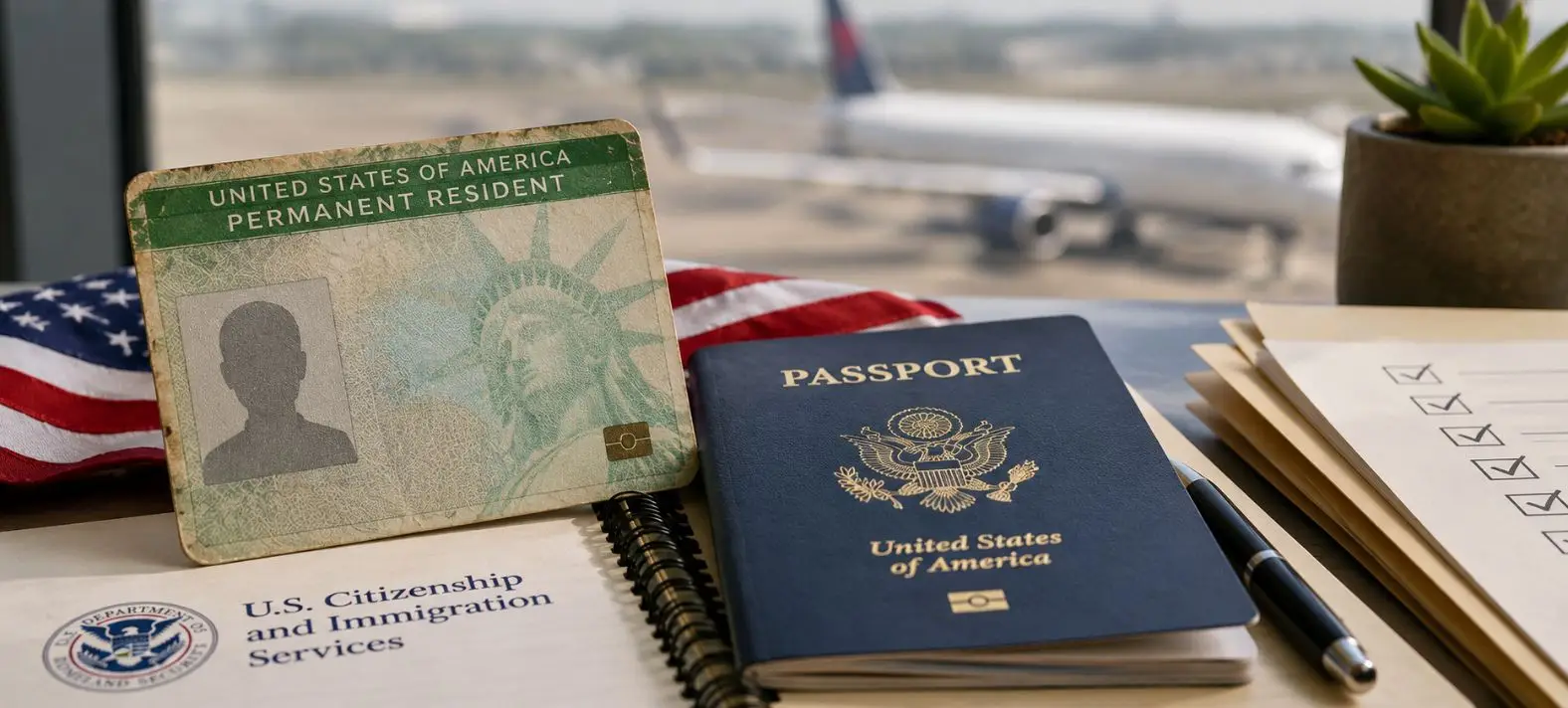
A green card is proof of your permanent resident status, not the status itself. Form I-551, the actual card, has an expiration date printed on it for security and identification reasons. Your legal right to live and work in the United States as a permanent resident does not expire on that same date.
If your card expired 10 years ago, you are most likely still a lawful permanent resident. The card became outdated, but your status remained intact as long as you did not do anything that would cause USCIS to consider your residency abandoned, such as spending an extended period outside the country or committing certain crimes.
An expired card no longer serves as valid proof of status in most places. Employers cannot accept it for I-9 verification. Airlines and CBP officers may flag it. State DMVs may reject it for license renewals. The status remains, but proving it becomes harder each year you wait.
According to the U.S. Department of State, travelers should ensure they carry documentation demonstrating their lawful status before international travel. Missing or outdated immigration documents can result in additional screening and travel delays.
What Are The Real Consequences Of Having An Expired Green Card For 10 Years?
Waiting a decade to renew causes practical headaches rather than automatic legal penalties. Here is what tends to occur.
1. Employment Verification Problems
Employers must see unexpired documents during I-9 checks. An expired card does not satisfy this requirement, which can delay a new job offer or create issues during a routine employment audit.
According to U.S. Immigration and Customs Enforcement, employers must verify both identity and employment authorization through the Form I-9 process. Expired documentation can cause delays when a permanent resident starts a new job or updates employment records.
2. Travel Disruptions
Airlines and CBP officers may flag an expired card at check-in or re-entry. This can cause extra questioning, delays, or a trip to secondary inspection that a current card could have avoided.
3. Trouble Renewing A Driver’s License Or State ID
Most state DMVs require valid, unexpired immigration documents to renew a license or ID. An expired green card is often rejected, forcing a return trip to the DMV to update it.
4. Limited Access To Government Or Financial Services
Some banks, government offices, and benefit programs require current identification. An outdated card can delay or block access to services that depend on verified, unexpired status.
5. Increased Scrutiny On Future Applications
If you later apply for citizenship or another immigration benefit, an expired card can lead to additional questions from USCIS.
According to USCIS data, more than 9.1 million people are lawful permanent residents in the U.S. While an expired green card does not mean you have lost your status, it can create complications with work, travel, and everyday tasks the longer it goes unresolved.
Not sure where you stand? Request a free evaluation now and get clarity on your case before it creates bigger complications.
Will I Get Deported If My Green Card Is Expired?
An expired card by itself is not a reason for deportation. Immigration officers understand that cards lapse and that renewal delays occur for all kinds of reasons, from financial stress to simple forgetfulness.
Deportation risk comes from separate issues: criminal convictions, immigration fraud, abandoning your U.S. residence, or extended time spent living abroad without proper documentation. If none of those apply to you, an expired card is an inconvenience to fix, not a deportation trigger.
Ignoring it indefinitely is not a smart strategy. The longer a card remains expired, the more questions can arise if you interact with immigration officials, so addressing it sooner reduces friction later.
How Long Can I Stay Outside The U.S. Without Losing My Green Card?
This is more serious than a simple expired card. Trips outside the United States that last too long can suggest to USCIS that you abandoned your residency, regardless of whether your card is current or expired.
Generally:
- Under six months rarely raise concerns.
- Lasting six months to one year, it can trigger additional questions at reentry.
- Over one year without a reentry permit can lead USCIS to presume you gave up your residency. Before planning extended travel, it is also helpful to understand current Reentry Permit Processing Time estimates so you can prepare documentation before leaving the United States.
- Absences of two years or more, even with a reentry permit, often require a returning resident visa.
Many permanent residents ask what happens if I stay more than 6 months outside u.s. with green card status, since longer absences often trigger additional questions about whether residency has been maintained.
If your card expired 10 years ago and you spent long stretches outside the country during that time, your situation is more complicated than that of someone whose card simply sat unused. It is important to document your ties to the U.S., such as tax filings, employment records, and family residence, to show you never intended to abandon your status.
Can You Get Back Into The U.S. With An Expired Green Card?
Yes, in most cases, but expect extra scrutiny. CBP officers can admit permanent residents with expired cards, especially if the trip was short and the traveler can explain the situation. You may be pulled for secondary inspection, asked additional questions, or given a short deadline to renew your card once you’re back.
If you are outside the U.S. and your card is lost, stolen, or expired, USCIS Form I-131A allows you to apply for a travel document to return to the U.S. Filing this in advance, rather than showing up at the airport with an expired card, saves time and stress.
Can You Still Renew A Green Card That’s Been Expired For 10 Years?
Yes. There is no deadline for filing Form I-90, the application to renew or replace a green card. Whether your card expired 5, 10, or 20 years ago, the renewal process is the same.
The same Form I-90 process is also used for lost green card replacement, making it the primary solution whether your card is expired, damaged, or missing.
Green card renewal after 10 years typically involves:
- Confirming you are still eligible as a permanent resident
- Filing Form I-90 online or by mail
- Paying the filing fee
- Attending a biometrics appointment
- Waiting for USCIS to process and mail your new card
Processing times vary, but USCIS reports median I-90 processing times range from a few months to just under a year, depending on the service center and backlog. Filing online tends to be slightly faster than paper applications.

Will USCIS Ask Why You Waited 10 Years To Renew?
According to USCIS, it does not require an explanation for why you waited to file Form I-90. The renewal process itself does not include a question requiring justification.
If other red flags exist, such as long absences or gaps in tax records, an officer may ask follow-up questions during biometrics or a later interview. Keeping documentation ready, like past tax returns, lease agreements, or utility bills showing continuous U.S. residence, makes this conversation brief if it comes up.
Are You Still Eligible For U.S. Citizenship If Your Green Card Expired Years Ago?
Eligibility for naturalization depends on continuous residence and physical presence, not on whether your card is current. If you meet the standard requirements, generally five years as a permanent resident, or three years if married to a U.S. citizen, along with continuous residence and good moral character, you can move forward with Form N-400 even with an expired card.
Applicants who qualify should also begin preparing for the naturalization interview, where USCIS reviews eligibility, residence history, and knowledge of U.S. civics and government.
Some applicants worry about issues that arise after becoming citizens and ask whether can us citizenship be revoked; in most cases, citizenship remains secure unless it was obtained through fraud or serious misrepresentation.
Many applicants renew their green card and apply for citizenship around the same time, since both processes require similar background documentation.
Curious where you stand on the path to citizenship? Check out our visa guide now to see how your timeline lines up.
What Should You Do First: Renew Your Green Card Or Apply For Citizenship?
This depends on your specific timeline:
- You meet the residency requirement for naturalization, filing Form N-400 directly often makes more sense than renewing first.
- Citizenship is still a few years away; renewing your green card now avoids travel and employment headaches in the meantime.
- You need to travel internationally soon; renewal becomes the priority regardless of your citizenship timeline.
How Do You Renew A Green Card That’s Been Expired For A Decade?
Green card renewal after 10 years follows the same process as any other I-90 filing. Here is the step-by-step breakdown.
Step 1: Confirm You Are Still Eligible
Before filing anything, make sure you are still a permanent resident. If you have not spent extended time outside the U.S. or run into other status-affecting issues, you are almost certainly eligible to renew.
Step 2: Gather Your Documents
Collect your expired green card, a government-issued photo ID, and any proof of continued U.S. residence, such as tax returns or utility bills, in case USCIS requests it.
Step 3: Complete Form I-90
File Form I-90 online through your USCIS account or by mail. Check that your name, address, and other details match your official records to avoid processing delays.
Step 4: Pay The Filing Fee
Submit the required filing fee with your application. Fees can change, so confirm the current amount on the USCIS website before submitting.
Step 5: Attend Your Biometrics Appointment
USCIS will schedule a biometrics appointment to collect your fingerprints, photo, and signature. This step confirms your identity and updates your file.
Step 6: Wait For Processing And Your New Card
Once biometrics are complete, USCIS processes your application and mails your new green card. Processing times vary, but USCIS reports median I-90 processing times range from a few months to just under a year, depending on the service center and backlog. Filing online tends to be slightly faster than paper applications.
During the renewal process, many applicants monitor their USCIS account for updates such as “new card is being produced,” which generally indicates the application has been approved and the replacement card is being prepared for mailing.
Filing Timeline Considerations
The rules also work in the opposite direction. Can I renew my green card 1 year before it expires? Yes, USCIS allows renewal filings up to six months before expiration, though many people wait longer without major issues. This flexibility shows the system is built around convenience rather than strict penalties for early or late filing.

How Can Robinson Immigration Law Help?
Sorting out a decade-old expired green card involves more than filling out a form. Our team reviews your history, including extended travel, employment gaps, or prior immigration filings, to identify anything that could slow your renewal or naturalization application.
We help clients file Form I-90, prepare Form I-131A for those stuck abroad, and coordinate concurrent green card and citizenship filings when appropriate.
If your case involves added complexity, like long absences or residency abandonment questions, we build the documentation strategy needed to move your case forward smoothly.
FAQs About Green Card Expired 10 Years Ago
2. Will I Get Deported If My Green Card Is Expired?
An expired card alone does not lead to deportation. Other factors, like criminal history or abandoned residency, carry that risk instead.
3. How Long Can I Stay Outside The U.S. Without Losing My Green Card?
Trips under six months are generally safe. Longer absences increase scrutiny and may require a reentry permit or a returning resident visa.
4. Can You Get Back Into The U.S. With An Expired Green Card?
Reentry is usually possible, but may involve additional questioning or a request to renew the card shortly after arrival.
5. Do I Have To Renew My Green Card Before Applying For Citizenship?
Not always. If you already meet naturalization requirements, you can often file Form N-400 directly, even with an expired card.
Conclusion
An old, expired green card feels like a bigger problem than it is, but leaving it unresolved adds friction to travel, work, and future immigration filings.
Whether your card expired 2 or 20 years ago, the fix is the same: follow the process, and your permanent resident status is likely intact. If you are exploring options such as the EB-NIW based on your professional background, now is a good time to evaluate your overall immigration picture.
Contact us today and let our team help you sort out your green card and assess whether you qualify for EB-NIW.